Open Spaces & Parks
The trails, ridges, and views that made us fall in love with Castle Rock don't protect themselves. Keeping them takes votes, budgets, and a Mayor willing to say so out loud.
Open space is a decision
Look in any direction from downtown and you can see why people choose Castle Rock: the Rock itself standing over the town, the ridgelines of Ridgeline Open Space, the mesas at Gateway and Hidden Mesa, the East Plum Creek Trail threading it all together. None of it is an accident. Every acre of preserved land exists because, at some point, this town chose to keep it instead of building on it.
Open space is the unbuilt, natural land held in trust for everyone: the wildlife corridors, the buffers that keep one neighborhood from bleeding into the next, the trail networks that let a kid ride from home to the creek without crossing a highway. It is also the one asset a town can never manufacture more of. Once a parcel is entitled and built, it never comes back.
The commitment is simple to state and hard to keep: protect every acre already preserved, and pursue every realistic opportunity to add more, through acquisition, conservation easements, and smart conditions on development, while land on our edges is still open. The parcels that remain are one-time decisions, and they deserve to be treated that way.
Parks are the front yard we share
Parks are the other half of this commitment, and they are not the same thing as open space. A park is built and cared for on purpose: the fields and playgrounds in our neighborhoods, Festival Park downtown, the amphitheater, trails, and rec amenities at Philip S. Miller Park. Open space is where Castle Rock breathes; parks are where it gathers.
Growth puts pressure on both, but parks feel it first. Every new neighborhood adds families who need fields, courts, and playgrounds, and the honest way to meet that need is to require parks early in a development's life, not as a promise for later, and to grow the maintenance budget as the acreage grows. A park the town can't afford to maintain isn't an amenity; it's a liability with a swing set.
The measure of success is concrete: a park within an easy walk of every family, fields that aren't overbooked, equipment that isn't worn out, and a parks system that keeps pace with the population instead of chasing it.
Laura has already delivered
This commitment isn't campaign-season talk; it's what Laura has spent six years on Town Council doing. She led the charge on the Town's largest one-time open space acquisition in its history: Lost Canyon Ranch Open Space, 681 acres of grasslands, pine forest, hoodoos, and canyon cliffs south of town, preserved forever and opened to the public in 2026 with some ten miles of hiking trails. Her name is cast on the bronze plaque at the historic ranch barn.
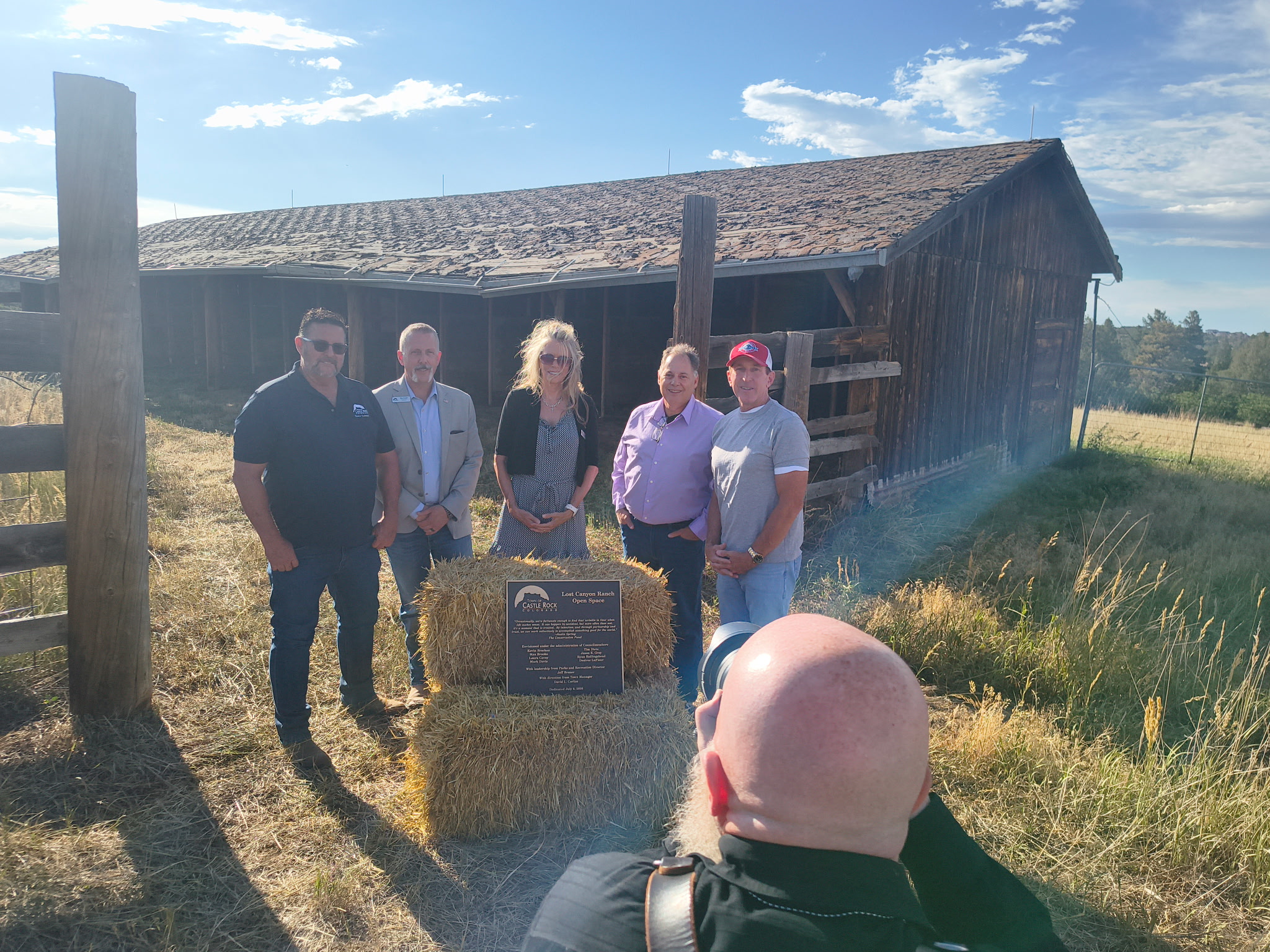
It's the same story across the parks system Laura has championed: 25 Town parks and more than 100 miles of Town-managed trails, over 130 miles counting our partners' networks, linking neighborhoods to open space across Castle Rock.
And when Emerald Park, the neighborhood park by Plum Creek, was in danger of being put on hold, Laura was one of the deciding voices on council for building it on schedule, because the families on that side of town had waited long enough for a park of their own. It opened in October 2024, snail-shell climbing tower and all.
Eighteen years on these trails
Laura didn't learn to love Castle Rock from a dais. She learned it over eighteen years as a neighbor, on the same trails and under the same views as everyone else, watching open land on the Front Range disappear one approval at a time in towns that assumed it would always be there.
Her professional life reinforces the same lesson. Twenty-seven years as a solutions architect taught her that some decisions are one-way doors: you can revisit a budget every year, but you cannot un-build a subdivision. When a choice is irreversible, you make it deliberately, with data, and with the next twenty years in mind. That is exactly how she treats every vote that touches open land.
"Nobody ever moved to Castle Rock for the rooftops. We came for what's between them, and a Mayor's job is to keep it that way."Laura Cavey
The return on preserved ground
Open space and parks aren't a luxury line in the budget. They are one of the few investments that pay the town back on every front at once:
- Home values: homes near protected land and well-kept parks hold their value, and the whole town benefits from the reputation.
- Healthy families: trails, fields, and playgrounds within reach mean kids outside and neighbors who actually know each other.
- Working land: preserved corridors carry wildlife, absorb stormwater, and give firefighters defensible buffers on our edges.
- Identity: the views and open ridgelines are why people choose Castle Rock over any other exit on I-25. They are the brand.
Every one of those returns compounds over time, and every one of them depends on decisions the next council will make.
What happens if we don't
You don't have to imagine a Front Range town that let its open land slip away; you can drive through several of them in an afternoon. Wall-to-wall rooftops, ridgelines traded for retaining walls, and parks so oversubscribed that families stop using them. It happened there the same way it could happen here: not in one dramatic vote, but in a series of reasonable-sounding approvals.
The failure is permanent and it is expensive. A town that under-invests in parks while it grows spends the next generation paying premium prices to buy back fragments of what it could have preserved whole, and no amount of money re-opens a built ridgeline.
That is what this commitment protects against: waking up in 2040 in a town that kept growing and lost the reason people came.